

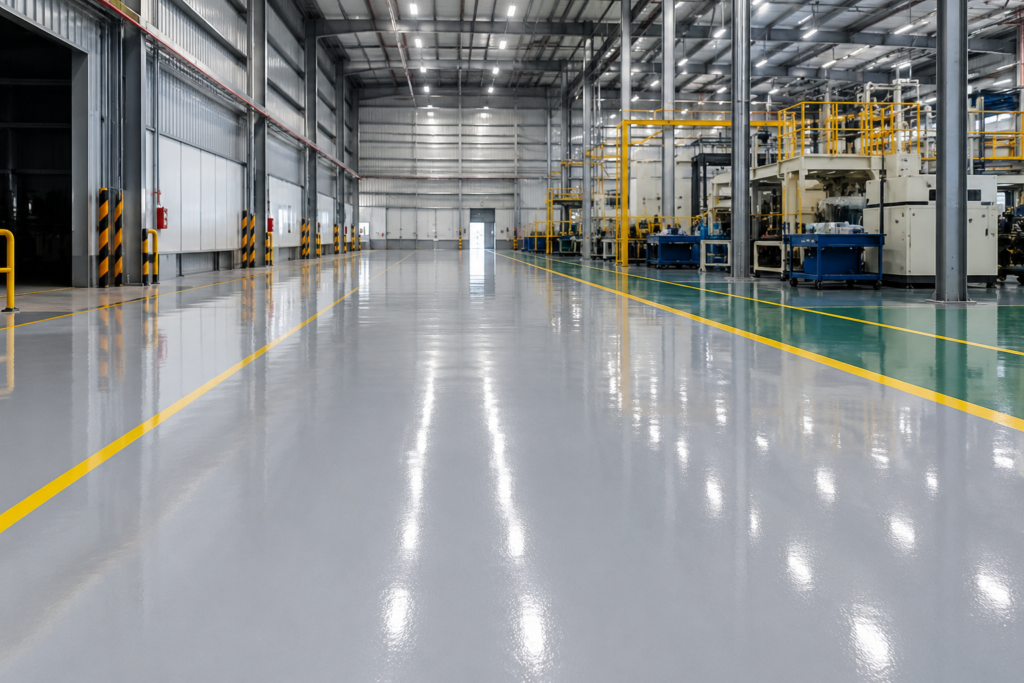
The floor is one of the most important parts in a building, especially in areas that have high activity like factories, warehouses, workshops, hospitals, labs, to commercial areas. The surface of the floor that continues to accept the load of vehicles, machines, labor activities, or exposure of certain materials requires better protection than the usual floor.
One of the many solutions used to increase endurance and the quality of the floor surface is floor epoxy. This layering system not only makes the floor look more neat and interesting, but it can also help create a surface that's easier to clean as well as to have resistance to daily operational activities.
Know the floor Epoxy System
Epoxy is a petrified material applied to the surface of the floor through several stages. Before materials are applied, the floor conditions need to be checked and prepared first so the layers can be properly attached.
In general, the process can include surface prep, cleaning, repair of damaged floor parts, primary applications, epoxy layers, to the end layer applications if necessary.
The end result is the surface of the floor that's more flat, stronger, and more clean than the concrete surface.
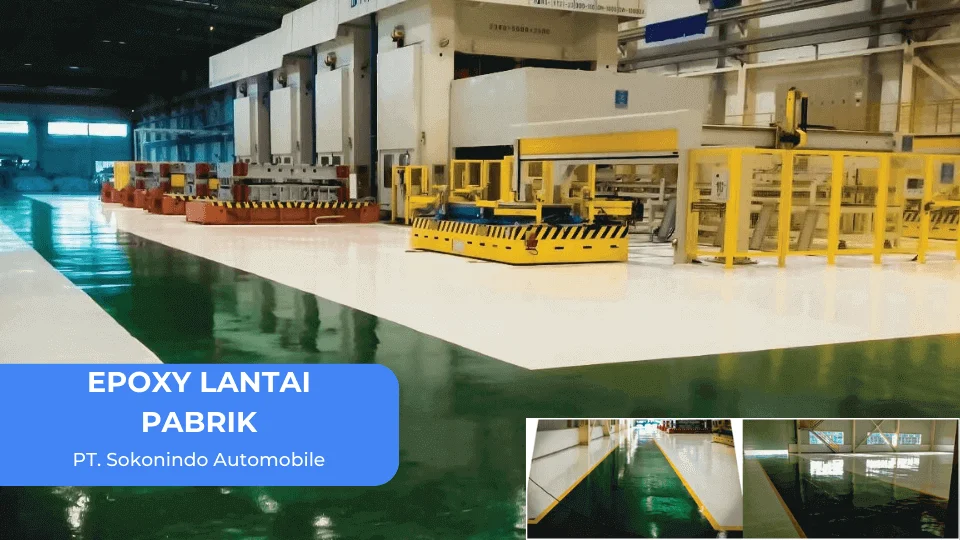
Why is Epoxy used so much in Industrial Area?
Industrial areas have different characteristics of regular home buildings. The floor can accept heavy burdens, wheel friction, fluid, dust, and operational activities that take place every day.
Therefore, the selection of the poultice system needs to be adjusted to the conditions and functions of the room.
Some benefits that make the epoxy are much considered among others:
1. Surface Easier Cleaned
The epoxy surface made with the right system has more easily cleaned characteristics. It's very helpful in areas that require daily hygiene like warehouses, production areas, showrooms, as well as health facilities.
The easy floors can also help keep the working environment clean and professional.
2. Neat Floor View
In addition to the protection aspect, the epoxy can provide a pretty significant visual change. The surface of the floor can have a more uniform and professional look.
Color options can also be used to help distinguish specific areas. For example, vehicle traffic, storage areas, production zones, or workspaces can use a different color as part of the visual system inside the building.
3. Help protect the surface of Beton
The concrete is known to be a powerful material, but that doesn't mean it doesn't require protection. Vehicle activity, friction, dust, and use of a particular substance in the long run can affect concrete surface conditions.
A suitable protective layer can help maintain the surface of the floor so regular care is easier to do.
Four. Compatible with Area Requires
Not all rooms need the same epoxy system.
The area with light activity certainly has a different need for a factory floor that receives a load of vehicles or areas associated with certain chemicals.
Therefore, the system selection needs to consider the state of the floor, the level of traffic, the kind of burden, the workenvironment, as well as the function of the room.
Type Area Could Use Epoxy
Epoxy use is not limited to factories alone. It can be considered for different types of buildings and areas.
Some of them are:
- Factory and production area
- Warehouse and distribution center
- Workshop
- Garage
- Parking lot
- Hospital
- Laboratory
- Commercial space
- Showroom
- Storage area
- General facility area
For special areas of need, material selection and layer thickness should be done by field conditions.
Epoxy Floor for Caredary Industrial Area
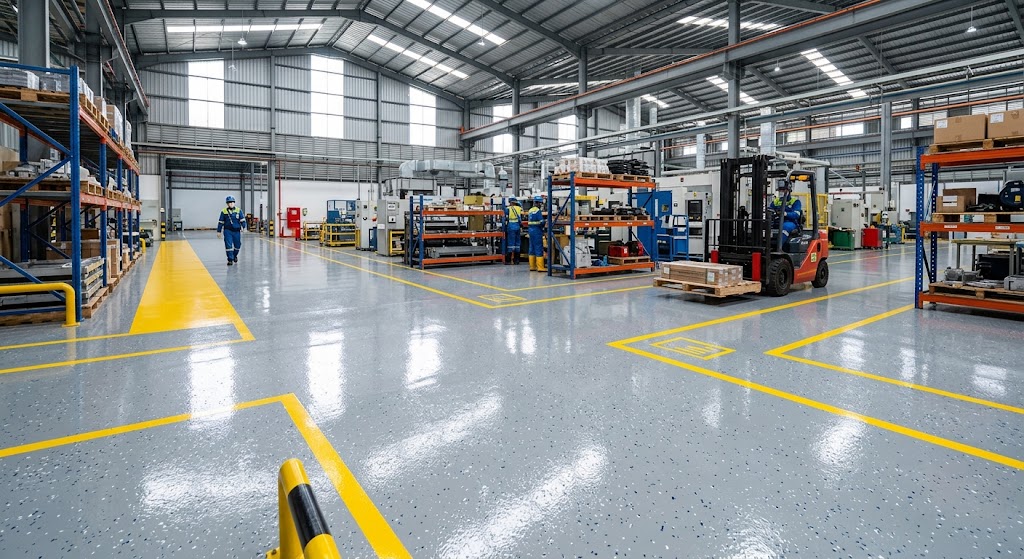
The Clairvoyant is one of the most high-end industrial activities. Many production facilities, warehouses, workshops, and support buildings require a floor surface that can support everyday operations.
In these conditions, the floor is not just part of the building, but also part of the working system.
The storeroom floor for example should be able to support moving goods using hand palette, forklift, or other operational vehicles. Meanwhile, the production area floor can require different characteristics because it has to do with machines, production, or hygiene needs.
Therefore, before determining the auxiliary system, the condition of the floor and its usage need to be looked at thoroughly.
For factory owners, warehouses, hospitals, and commercial buildings that are searching for information about floor storage systems in the Caredary region, one of the references could be learned is Cardroom Epoxy.
The page talks about options of epoxy systems and floor storage that can be used for different needs, including industrial areas and other facilities.
Things to be concerned about before using Epoxy
The outcome of the job is not only defined by the materials used. The surface condition of the floor is also a very important factor.
Some things should be checked first amongst others:
Condition concrete. The surface is cracked, fragile, or sustained damage needs to be dealt with before the process of plating.
The humidity of the floor. The conditions of inappropriate humidity can affect the damp power of the layer.
Surface conditions. Dust, oil, excrement, and other contaminants need to be cleared to get the surface ready for materials.
Room activity. The type of vehicle, load, human traffic, as well as production activity needs to be calculated when determining the auxiliary system.
Special needs. Certain areas may require additional characteristics such as resilience to chemicals, antistatic, or resilience to certain environmental conditions.
By considering those factors from the beginning, the auxiliary system can be chosen more accurately and accordingly to fit the needs of the building.
Good preparation Specify End Results
One of the mistakes that often happens is too focused on material types, but less of a surface prep.
In fact, the surface of the floor is the foundation of the entire auxiliary system. If the surface is not properly prepared, a good-looking layer at first can have problems later on.
Therefore, processes like grinding, cleaning, repair fractures or damaged concrete, and checking surface conditions become an important part before applications are done.
Conclusion
The floor's epoxy can be one of the choices to improve quality, display, and surface protection floors on different types of buildings. Its use can be adjusted to the characteristics of the room, the activity rate, the floor load, and the special needs of each area.
For the industrial building in the Clairvoyant, the harvest system should not just consider the end view. The condition of the floor, operational activity, the kind of burden, the need for hygiene, and the environment where the floor is used also needs to be noticed.
With proper surface planning and preparation, the floor can have a more neat display at once supporting building operational activities in the long run.