
When I first entered the laboratory world, the beaker glass was one of the most common tools I've ever seen. Among all the lab tools available, the beaker glass seems to have its own charm. Simple, simple, and multitasking! Who isn't fascinated by the colourful liquid inside? My first moment when using Beaker glasses. is to measure solution for chemical experiments. It was a moment that made me feel like a true scientist.
Beaker Glass Understanding
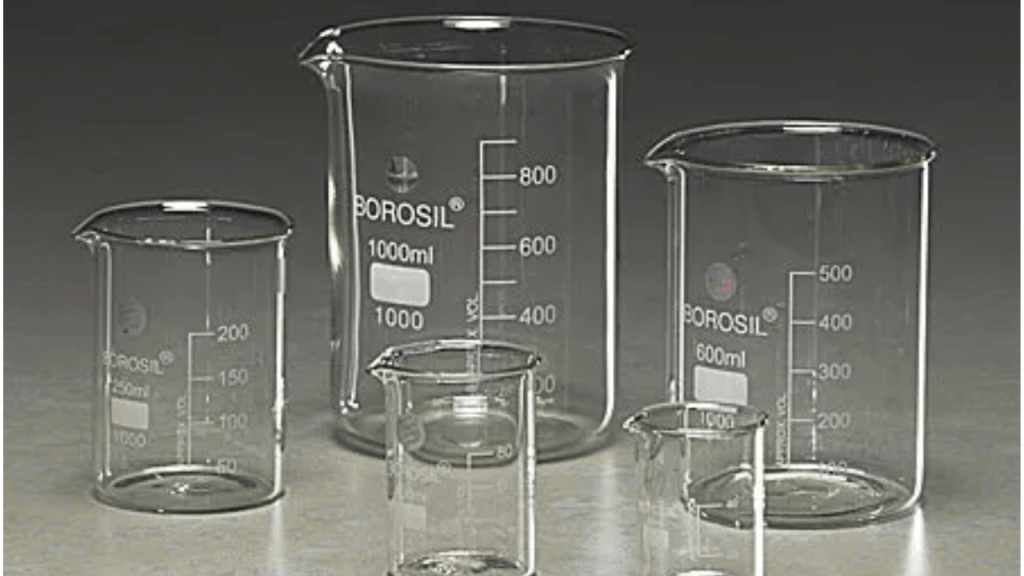
So, what exactly is a beaker glass? Basically, the beaker glass is a cylinder-shaped container made of glass or plastic, usually with a measure scale next to it. The design allows us to stir, mix, and even heat up all kinds of fluids. The size of it varies, from a small one with 50 millilitres to a large amount of 2000 ml or so.
The beker glass usually has a flat base, so it's stable when placed on the lab table. Some models are even equipped with funnels to ease mixing and pouring. In my experience, I learned that not all beakers are created equal. Some are more heat-resistant than others, depending on the materials used. It's important, especially when we're conducting experiments involving warming.
Beaker Glass Function
Speaking of functions, beaker glasses have a lot of roles in the lab. First and foremost, this glass is used to measure the volume of fluid. When I started studying chemistry, Both have measurement functions, but a measuring glass is more accurate to measure the right volume. A beker glass, on the other hand, is more flexible for rough measurements and mixed materials.
Besides, beaker glasses also serve as a container to mix chemicals. Imagine, when I first tried to mix two solution for experiments, I used a beker glass and saw an awesome chemical reaction. That's one of the most thrilling moments I've ever had! Besides, beker glasses can also be used to heat the fluid over the hot plate. However, make sure the beaker glass you use is heat-resistant!
Use Beaker Glass in Practics
Now let's talk about the use of beakers in practice everyday in the lab. When you enter the lab, the first step is to pick the right beker glass. I made this mistake once: using a little beker glass to mix a lot more solution. As a result, the spark goes everywhere, and the lab falls apart! Lesson learned: size is important.
In the everyday use, beaker glasses are very useful for making solution. For example, when I need to dissolve salt in water, I often use beaker glasses to mix both. Just keep in mind, if you're working with a dangerous chemical, be sure to use an APD like gloves and safety glasses.
There are also times when I have to do the stimulation. In such experiments, beaker glasses are used to hold indicator solution. The moment of frustration appeared when I realized I didn't have the right pick. I have to carefully pour the solution of the beker glass into the buffet, and despite a little spill, I feel satisfied when it finally works.
The one thing you can't forget is the importance of a clean beker glass. After every use, I always wash it with soap and water, and then let it dry upside down. Cleanliness is very important in the lab, because the residue from previous experiments could affect the results of the next experiment.
General Error To Aborting
Speaking of hygiene, let's discuss some of the general mistakes I've made in my beaker. One of the biggest mistakes was not paying attention to the chemical labels. I remember mixing two soles without even looking at the label, and as a result, I got a massive reaction mix! That's a very valuable lesson: always check out the chemicals you use.
Another mistake was not using beker glasses that fit for acid solution or base. I used an ordinary beaker glass for acid solution, and yes, it eroded his glass wall. Now I'm always sure using beaker glasses is designed for corrosive chemicals. It makes the experiment safer and smoother.
Practical Tips to Use Beaker Glass
Here are some practical tips that could help you use the beaker glass more effectively:
- Select the Right Beaker Glass: Make sure you pick a beker glass that matches the type of material to be used. If the used material is corrosive, use a beaker glass that's chemical-resistant.
- Watch SizeFeel free to use a bigger beaker glass than you think you need. Preventing the spill is much better than cleaning up after.
- Don't forget to clean upAfter every use, clean the beaker glass carefully to avoid contamination in the next experiment.
- Use APDSafety is first. Always wear eye and gloves when working with dangerous chemicals.
- Record All ObservationIf you do an experiment, note down all the observations you make. It helps to do analysis later on.
Cover
A beaker glass is a tool that cannot be ignored in a laboratory world. From measurement to mixing, its diverse functions make it a very important tool. With my rigorous experience and learning, I hope you can appreciate the role of a beaker glass in every experiment. Remember, every mistake is a chance to learn. Good luck in your laboratory adventure!
Source: Pandulab